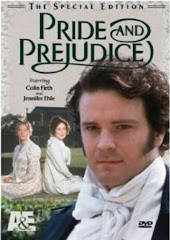
Pride and Prejudice is full of character-driven themes that revolve around the literary concept of “comedy of manners.” A comedy of manners is a literary work that deals with young lovers attempting to unite in marriage, and usually includes several incidences of witty commentary from the main characters, which can take form in terms of anything from clever flirting to open warfare, as in the case of Darcy and Elizabeth. Pride and Prejudice is mainly concerned with the pairing of several couples and the issues surrounding each of those couples. The pursuit of marriage in this novel brings the other major themes to light.
The novel’s title itself indicates one of the major themes of the novel. All of the characters in this novel (with the exception of Jane and Bingley) suffer from the sins of both pride and prejudice. This is evident in Darcy’s introduction, when the entire neighborhood is set against Darcy (and he against them):
Mr. Darcy soon drew the attention of the room by his fine, tall person, handsome features, noble mien—and the report which was in general circulation within five minutes after his entrance of his having ten thousand a year . . . and he was looked at with great admiration for about half the evening, till his manners gave a disgust which turned the tide of his popularity; for he was discovered to be proud, to be above his company, and above being pleased; and not all his large estate in Derbyshire could then save him from having a most forbidding, disagreeable countenance (6).Thus Hertfordshire society looks down upon Darcy for the remainder of the novel. This introduction to Darcy also demonstrates an important point about the relationship between pride and prejudice—one leads to the other. The affront that the neighborhood has suffered by Darcy’s refusal to interact with them leads to their prejudice. Darcy, possessing pride as well, is no better, as he develops a bias against the neighborhood and the Bennett family in particular. This intolerance leads to Darcy’s interference in and prevention of Jane and Bingley’s romance. Elizabeth also suffers from both pride and prejudice, as her mortification over Darcy’s description of Elizabeth as “tolerable, but not handsome enough to tempt” him (7), and his proud behavior at the first party at Netherfield, as she rejects Darcy’s first proposal:
“From the very beginning, from the first moment, I may almost say, of my acquaintance with you, your manners impressing me with the fullest belief of your arrogance, your conceit, and your selfish disdain of the feelings of others, were such as to form that groundwork of disapprobation on which succeeding events have built so immovable a dislike; and I had not known you a month before I felt that you were the last man in the world whom I could ever be prevailed on to marry”(145).While Darcy and Elizabeth are alike in terms of personality and ability, and the offer of marriage would be financially and socially advantageous to Elizabeth, her hatred of Darcy, based on her impression of him, determines her decision.
Austen presents two solutions to the problems created by pride and prejudice. The first is to avoid either. Jane and Bingley exemplify this idea. Neither has any pride, and they are not easily prejudiced by the comments of others. When Jane hears of the rumors regarding Wickham, she refuses to believe any of them without proof, whether it is Wickham’s claims of Darcy’s abuse, or Wickham’s infamous escapades with money and Georgiana Darcy. Bingley is of a similar mindset, and refuses to believe or internalize any of the criticisms of his sisters or Darcy regarding anyone in Hertfordshire. Jane and Bingley’s capability to avoid both pride and prejudice is what brings about their happiness at the end of the novel, because their goodness is truly unaffected.
For most of the characters, as well as the rest of us, the faults of pride and prejudice cannot be so easily remedied. Austen gives the rest of us our answer to the problems of these two failings through the development of the relationship between Darcy and Elizabeth. The heated exchange between these two characters in Chapter 34 and Darcy’s subsequent letter in Chapter 35 demonstrates both the effects of pride and prejudice and the solution to the problem. Elizabeth’s accusations of Darcy’s pride and his interference in the lives of Jane and Wickham make Darcy reexamine his attitude toward Jane and toward his behavior. Darcy thinks about his mistakes, and by doing so, is able to recognize them, as he tells Elizabeth after she accepts his second proposal:
“The recollection of what I then said, of my conduct, my manners, my expressions during the whole of it, is now, and has been many months, inexpressibly painful to me. Your reproof, so well applied, I shall never forget: ‘had you behaved in a more gentlemanlike manner.’ Those were your words. You know not, you can scarcely conceive, how they have tortured me; though it was some time, I confess, before I was reasonable enough to allow their justice” (275).Despite his earlier convictions about the Bennetts’ inferiority and the offense that Darcy’s pride has taken through his attraction to Elizabeth, Darcy is able to conquer his negative ideas so that he can see the error of his ways.
Elizabeth, too, must conquer her own pride and prejudices in order to see Darcy’s worth. When Darcy explains his actions in Chapter 35 as a result of the conversation during the previous chapter, Elizabeth must come to terms with several of the problems that she has ignored or avoided throughout the novel. She must acknowledge Jane’s appearance of indifference toward Bingley, which even Charlotte Lucas has previously noted to her. Elizabeth must admit that she might be wrong about Wickham, especially given his refusal to be in the same room as Darcy and his attentions toward Miss King. And most difficult of all, Elizabeth must deal with the impropriety of her parents and her younger sisters, all of which she has known but refused to censure her father for because she adored him so much. Like Darcy, Elizabeth must review and review these facts until she can put aside her prejudices against Darcy so that they can be together.
Another theme that appears in the novel is the relationship between reputation and marriage. Because the lack of money and societal connections often made it difficult for middle-class girls to marry, a girl’s reputation needed to be carefully guarded and maintained. The damage created by a thoughtless act was often irreparable, especially when it came to issues of romance, and one action by one daughter often destroyed the reputation of the entire family. This is what makes Lydia’s elopement with Wickham so horrible for the Bennett girls—she has not only jeopardized her own status in society by running away with Wickham, but she has also greatly damaged the opportunities of her sisters. Any possible suitors would not want anything to do with a family that cannot teach one of their girls to act properly. This action immediately ruins the developing romance between Darcy and Elizabeth, who are clearly on the path to marriage until Jane’s letter announcing Lydia’s escapade interrupts them. The problem is compounded by the “vulgarity” of the rest of the Bennet family—the obnoxious whining of Mrs. Bennet, the neglect of Mr. Bennet, the pompous attitude of Mary, and the insipid nature of Kitty. Any author attempting to uphold the guilt-by-association tendencies of Regency society would have ended the novel in tragedy at this point, because Darcy and Bingley would never gain any societal advantage from associating with Elizabeth and Jane.
Austen, however, disagrees with the stereotyping of families and daughters in particular by the thoughtlessness of their relatives, and demonstrates that those who are strong enough to question the practices of society can be rewarded for it. Both Darcy and Bingley, who have taken the time to get to know and understand Elizabeth and Jane, see past Lydia’s foolishness and recognize the value of the women they love. They choose to ignore the dictates of their society for marital happiness. That happiness will help them overcome their problems. Bingley and Jane must tolerate the Wickhams, and are so irritated by them that even Bingley starts to hint that he might ask them to leave (which is extreme for someone who likes everyone). Darcy and Elizabeth must deal with Lady Catherine, whose anger takes a long time to abate. However, by the end of the novel it is clear that both couples have made the right choice, and despite their problems are rewarded for their willingness to move past the pride and prejudices of themselves and their society.
Monday, June 28, 2010

PRIDE AND PREJUDICE: SAMPLE ESSAYS
Topic #1
Elizabeth’s character is influenced by her relationships with other characters in the novel. Write an essay to show how she changes either in a positive or negative manner due to another’s influence.
Outline
I. Thesis Statement: The role of Elizabeth in Pride and Prejudice is developed through the negative and positive influences of Jane, Darcy, and Mrs. Gardiner.
II. Influences of Jane
A. Positive influences
1. She can be trusted for her honesty
2. She will share sisterly confidences
3. She possesses a forgiving quality
4. She evinces the goodness of leading a moral life
B. Negative influences
1. She never sees evil in others
2. She keeps everything emotionally inside
III. Influence of Darcy
A. Positive influences
1. He forces Elizabeth to analyze her feelings
2. He makes Elizabeth grow in self-understanding
3. He makes Elizabeth change her emotional state
4. He shows Elizabeth how her own pride and prejudicescan be overcome
B. Negative influences
1. He is quick to judge
2. He often seems too proud and vain
3. He is sometimes too reserved in speaking his mind
IV. Influences of Mrs. Gardiner
A. Positive influences
1. She helps Elizabeth analyze her true feelings towardDarcy
2. She provides an opportunity to put Elizabeth andDarcy together
3. She shows by example how intelligence and rationalthinking can work out problems
B. Negative influences
1. She is sometimes naive about the Bennet family’s lack of social class
2. She is often too impressed by the upper class
V. Conclusion: Jane, Darcy, and Mrs. Gardiner are three major characters who influence Elizabeth.
Topic #2
Austen interjects comedy into many of the novel’s more serious moments. How do Mrs. Bennet, Mary, and Mr. Collins bring comic relief to some of the novels dramatic scenes?
Outline
I. Thesis Statement: The comic sides of Mary, Mrs. Bennet, and Collins enable Austen to lighten some of the more serious moments in the novel.
II. Mary
A. How is she portrayed?
1. She speaks like a textbook
2. She is always the sister who thinks too much
3. Her comments have little to do with a given situation
B. Instances of comic relief
1. She has opinions about events that she knows littleabout
2. She has her nose stuck in a book when seriousdiscussions surround her
III. Mrs. Bennet
A. Her comic contributions
1. Her dialogues with her husband are comical andridiculous
2. Her social blunders are so many that the readerbegins to expect them
3. She lacks logic
4. When something goes wrong, she hides behind a fitof “nerves”
IV. Mr. Collins
A. His character and instances of comic relief
1. He thinks entirely too well of himself, and speaks witha false humility that is pompous, verbose, and longwinded
2. His proposal to Elizabeth is for all the wrong reasons
3. He fawns over upper-class women
4. His letters are full of self-importance and nonsense
V. Conclusion: Mary, Mrs. Bennet, and Collins provide comic
relief.
Topic #3
The whole novel revolves around attitudes and reasons for marriage. Write an essay comparing and contrasting the marriages of Charlotte, Lydia, Jane, and Elizabeth.
Outline
I. Thesis Statement: The marriages of four of the key characters and their pride and prejudices lead them to representan era.
II. Charlotte’s marriage to Collins
A. Reasons
1. He has a title and an estate
2. She is plain and unattractive
3. She is 26 and nearly an old maid
4. It is for convenience only
III. Lydia’s marriage to Wickham
A. Reasons
1. He is handsome and attractive
2. He has a commission in the army
3. She is 16 and in love
IV. Jane’s marriage to Bingley
A. Reasons
1. They both fell in love almost immediately upon meeting
2. He has a title and money
3. It is upward mobility for her
4. They are well-matched
V. Elizabeth’s marriage to Darcy
A. Reasons
1. They share mutual love and understanding
2. It is a social coup for Elizabeth
3. They compliment one another
4. They share trust and have confidence in each other
VI. Conclusion: The marriages of Charlotte, Lydia, Jane, and Elizabeth reflect typical marriages of that period.
Topic #4
Letter writing is a lost art in the twentieth century. Today, we pick up the phone, or send e-mail messages by computer. Letters were usually written in the first person, and they communicated style, intelligence (or lack of it), and insights into character. Explain how Austen used letters to reveal the innermost thoughts of her characters and to express their personalities.
Outline
I. Thesis Statement: Letter writing in Pride and Prejudice reveals a great deal about Collins, Darcy, and Mrs. Gardiner.
II. Collins’ personality as revealed by his letters
A. His personality is revealed by
1. His excessive verbiage
2. His pompous flattery
3. His insincere understanding or knowledge
4. His self-pride
5. His condemnation of others and self-praise
III. Darcy’s personality is reflected in his letters
A. He shows qualities not expressed verbally
1. His sincerity
2. His acknowledgment of faults
3. His perceptive analysis of others
4. His lack of guile or trickery
5. His honest devotion to those he admires
IV. Mrs. Gardiner’s personality is revealed in her letters
A. She is steadfast and intelligent with her perceptions
1. She has almost a sixth sense about character
2. She can intelligently come to conclusions regardingsocial situations
3. She shows warmth and understanding
4. She is critical but unbiased
5. She offers hope and understanding
V. Conclusion: Collins, Darcy, and Mrs. Gardiner reveal their personalities and thoughts by writing letters
Topic #5
Write an essay to show how the first impressions of major characters influence the plot and character relationships in Pride and Prejudice.
OutlineI. Thesis Statement: The first impressions of Darcy, Elizabeth, and Lady de Bourgh affect the plot and structure of Pride and Prejudice by their influences on other characters.
II. First impressions of Darcy
A. Positive influences
1. He exhibits good breeding
2. He is intelligent
3. He has pride in his worth
4. He seems loyal to his friends
B. Negative influences
1. He seems to be vain
2. He criticizes those below his social status
3. He exhibits indifference
4. He has strong opinions
III. First impressions of Elizabeth
A. Positive influences
1. She is accomplished in provincial society
2. She is a master of conversation
3. She is witty and well-mannered
4. She surpasses all of her sisters in intelligence
B. Negative influences
1. She is quick to make a judgment of character
2. She is sometimes too outspoken
3. She can be deceived by charm
4. She acts before she thinks out situations
IV. First impressions of Lady Catherine de Bourgh
A. Positive influences
1. She is wealthy and aristocratic
2. She runs a “tight ship” within her household
3. She oversees the care of her timid daughter
4. She is knowledgeable of all social amenities
B. Negative influences
1. She wants everything decided in her favor
2. She is overpowering and strongly opinionated
3. She forms immediate opinions on every subject
4. She won’t permit others to question her view points.
V. Conclusion: Elizabeth, Darcy, and Lady Catherine de Bourgh are three major characters whose first impressions influence the development of the plot of Pride and Prejudice.
Elizabeth’s character is influenced by her relationships with other characters in the novel. Write an essay to show how she changes either in a positive or negative manner due to another’s influence.
Outline
I. Thesis Statement: The role of Elizabeth in Pride and Prejudice is developed through the negative and positive influences of Jane, Darcy, and Mrs. Gardiner.
II. Influences of Jane
A. Positive influences
1. She can be trusted for her honesty
2. She will share sisterly confidences
3. She possesses a forgiving quality
4. She evinces the goodness of leading a moral life
B. Negative influences
1. She never sees evil in others
2. She keeps everything emotionally inside
III. Influence of Darcy
A. Positive influences
1. He forces Elizabeth to analyze her feelings
2. He makes Elizabeth grow in self-understanding
3. He makes Elizabeth change her emotional state
4. He shows Elizabeth how her own pride and prejudicescan be overcome
B. Negative influences
1. He is quick to judge
2. He often seems too proud and vain
3. He is sometimes too reserved in speaking his mind
IV. Influences of Mrs. Gardiner
A. Positive influences
1. She helps Elizabeth analyze her true feelings towardDarcy
2. She provides an opportunity to put Elizabeth andDarcy together
3. She shows by example how intelligence and rationalthinking can work out problems
B. Negative influences
1. She is sometimes naive about the Bennet family’s lack of social class
2. She is often too impressed by the upper class
V. Conclusion: Jane, Darcy, and Mrs. Gardiner are three major characters who influence Elizabeth.
Topic #2
Austen interjects comedy into many of the novel’s more serious moments. How do Mrs. Bennet, Mary, and Mr. Collins bring comic relief to some of the novels dramatic scenes?
Outline
I. Thesis Statement: The comic sides of Mary, Mrs. Bennet, and Collins enable Austen to lighten some of the more serious moments in the novel.
II. Mary
A. How is she portrayed?
1. She speaks like a textbook
2. She is always the sister who thinks too much
3. Her comments have little to do with a given situation
B. Instances of comic relief
1. She has opinions about events that she knows littleabout
2. She has her nose stuck in a book when seriousdiscussions surround her
III. Mrs. Bennet
A. Her comic contributions
1. Her dialogues with her husband are comical andridiculous
2. Her social blunders are so many that the readerbegins to expect them
3. She lacks logic
4. When something goes wrong, she hides behind a fitof “nerves”
IV. Mr. Collins
A. His character and instances of comic relief
1. He thinks entirely too well of himself, and speaks witha false humility that is pompous, verbose, and longwinded
2. His proposal to Elizabeth is for all the wrong reasons
3. He fawns over upper-class women
4. His letters are full of self-importance and nonsense
V. Conclusion: Mary, Mrs. Bennet, and Collins provide comic
relief.
Topic #3
The whole novel revolves around attitudes and reasons for marriage. Write an essay comparing and contrasting the marriages of Charlotte, Lydia, Jane, and Elizabeth.
Outline
I. Thesis Statement: The marriages of four of the key characters and their pride and prejudices lead them to representan era.
II. Charlotte’s marriage to Collins
A. Reasons
1. He has a title and an estate
2. She is plain and unattractive
3. She is 26 and nearly an old maid
4. It is for convenience only
III. Lydia’s marriage to Wickham
A. Reasons
1. He is handsome and attractive
2. He has a commission in the army
3. She is 16 and in love
IV. Jane’s marriage to Bingley
A. Reasons
1. They both fell in love almost immediately upon meeting
2. He has a title and money
3. It is upward mobility for her
4. They are well-matched
V. Elizabeth’s marriage to Darcy
A. Reasons
1. They share mutual love and understanding
2. It is a social coup for Elizabeth
3. They compliment one another
4. They share trust and have confidence in each other
VI. Conclusion: The marriages of Charlotte, Lydia, Jane, and Elizabeth reflect typical marriages of that period.
Topic #4
Letter writing is a lost art in the twentieth century. Today, we pick up the phone, or send e-mail messages by computer. Letters were usually written in the first person, and they communicated style, intelligence (or lack of it), and insights into character. Explain how Austen used letters to reveal the innermost thoughts of her characters and to express their personalities.
Outline
I. Thesis Statement: Letter writing in Pride and Prejudice reveals a great deal about Collins, Darcy, and Mrs. Gardiner.
II. Collins’ personality as revealed by his letters
A. His personality is revealed by
1. His excessive verbiage
2. His pompous flattery
3. His insincere understanding or knowledge
4. His self-pride
5. His condemnation of others and self-praise
III. Darcy’s personality is reflected in his letters
A. He shows qualities not expressed verbally
1. His sincerity
2. His acknowledgment of faults
3. His perceptive analysis of others
4. His lack of guile or trickery
5. His honest devotion to those he admires
IV. Mrs. Gardiner’s personality is revealed in her letters
A. She is steadfast and intelligent with her perceptions
1. She has almost a sixth sense about character
2. She can intelligently come to conclusions regardingsocial situations
3. She shows warmth and understanding
4. She is critical but unbiased
5. She offers hope and understanding
V. Conclusion: Collins, Darcy, and Mrs. Gardiner reveal their personalities and thoughts by writing letters
Topic #5
Write an essay to show how the first impressions of major characters influence the plot and character relationships in Pride and Prejudice.
OutlineI. Thesis Statement: The first impressions of Darcy, Elizabeth, and Lady de Bourgh affect the plot and structure of Pride and Prejudice by their influences on other characters.
II. First impressions of Darcy
A. Positive influences
1. He exhibits good breeding
2. He is intelligent
3. He has pride in his worth
4. He seems loyal to his friends
B. Negative influences
1. He seems to be vain
2. He criticizes those below his social status
3. He exhibits indifference
4. He has strong opinions
III. First impressions of Elizabeth
A. Positive influences
1. She is accomplished in provincial society
2. She is a master of conversation
3. She is witty and well-mannered
4. She surpasses all of her sisters in intelligence
B. Negative influences
1. She is quick to make a judgment of character
2. She is sometimes too outspoken
3. She can be deceived by charm
4. She acts before she thinks out situations
IV. First impressions of Lady Catherine de Bourgh
A. Positive influences
1. She is wealthy and aristocratic
2. She runs a “tight ship” within her household
3. She oversees the care of her timid daughter
4. She is knowledgeable of all social amenities
B. Negative influences
1. She wants everything decided in her favor
2. She is overpowering and strongly opinionated
3. She forms immediate opinions on every subject
4. She won’t permit others to question her view points.
V. Conclusion: Elizabeth, Darcy, and Lady Catherine de Bourgh are three major characters whose first impressions influence the development of the plot of Pride and Prejudice.
PRIDE AND PREJUDICE: THEN AND NOW
1810's: Europe is submerged in warfare throughout most of the decade by the struggle against the ambitions of Napoleon Bonaparte to unite the continent under French rule. Two of Austen's brothers, Frank and Charles, entered the British Navy and fought in the Napoleonic Wars.
Today: For the first time since the Napoleonic Wars, Europe considers a single multinational government in the European Union.
1810's: In the early nineteenth century, a woman's education differed greatly from that of a man. While boys attended boarding schools and studied Latin, mathematics, and science, girls were schooled at home by governesses, focusing on the fine arts, writing, reading, and sewing.
Today: Over one hundred twenty-five million women graduated from high school in 1994 alone, while around eight hundred thousand females were enrolled in colleges and universities. Not limited to a specific gender, most American high schools and universities are open to both sexes, and course offerings are not exclusive to men or women.
1810's: Because of a lack of professions for women to enter and become self-supporting, few women could afford to remain single in early 1800s. Most women elected to marry rather than depend on other family members for financial support.
Today: Many women in America have increasingly decided to remain single. By 1994, only fifty-nine percent of women in America were married. In addition, almost sixty percent of American women over the age of sixteen were employed in the labor force, either part-time or full-time.
Today: For the first time since the Napoleonic Wars, Europe considers a single multinational government in the European Union.
1810's: In the early nineteenth century, a woman's education differed greatly from that of a man. While boys attended boarding schools and studied Latin, mathematics, and science, girls were schooled at home by governesses, focusing on the fine arts, writing, reading, and sewing.
Today: Over one hundred twenty-five million women graduated from high school in 1994 alone, while around eight hundred thousand females were enrolled in colleges and universities. Not limited to a specific gender, most American high schools and universities are open to both sexes, and course offerings are not exclusive to men or women.
1810's: Because of a lack of professions for women to enter and become self-supporting, few women could afford to remain single in early 1800s. Most women elected to marry rather than depend on other family members for financial support.
Today: Many women in America have increasingly decided to remain single. By 1994, only fifty-nine percent of women in America were married. In addition, almost sixty percent of American women over the age of sixteen were employed in the labor force, either part-time or full-time.
Sunday, June 27, 2010
PRIDE AND PREJUDICE SUMMARY
At Meryton
Perhaps the most famous opening lines from any nineteenth-century novel are the opening lines to Jane Austen's Pride and Prejudice: "It is a truth universally acknowledged, that a single man in possession of a good fortune, must be in want of a wife."
These words are spoken by Mrs. Bennet to Mr. Bennet on the news that a gentleman of fortune has just moved to Netherfield Park, a nearby estate. The Bennets begin this story with a peculiar problem: they have five unmarried daughters and no sons. Their estate is entailed, or restricted in inheritance, to Mr. Collins, a family cousin. Upon Mr. Bennet's death, Mr. Collins will inherit the family lands, which will leave the Bennet daughters without a home or money. It becomes vital, therefore, that at least one of the daughters marries well in order to support and house their sisters (and mother if she is still alive) should they not be able to marry.
Shortly after arriving alone, Bingley brings to Netherfield his two sisters, Miss Bingley and Mrs. Hurst; his brother-in-law, Mr. Hurst; and his friend, Mr. Darcy, who also happens to be wealthy and unmarried. Not wanting to miss a favorable introduction to their new neighbors, Mrs. Bennet pleads with Mr. Bennet to call on Bingley so that she can begin introducing her daughters to him. Initially Mr. Bennet refuses to play any part in matching any one of his daughters with Bingley. He tells his wife that if she is so intent on meeting the newcomers at Netherfield, she must visit Bingley herself. However, prudent manners forbade a woman to call on a strange man, making Mrs. Bennet powerless to begin the process which she hopes will lead to a marriage between one of her daughters and Bingley. Following the pronouncement that Mr. Bennet refuses to call on Bingley, Mrs. Bennet despairs that her daughters will never be able to meet with the eligible bachelor. Yet Mr. Bennet does call on Bingley, beginning the family's acquaintance with him. He takes ironic pleasure in surprising Mrs. Bennet with the news after letting her believe that he would not call on him.
The Bennet girls meet the Netherfield party for the first time at a small ball. Bingley proves to be personable and polite to the local folk, making him instantly well-liked. Darcy, while handsome and noble looking, appears proud and indifferent to participating in the activities of the evening or even socializing with the other guests.
The eldest daughter, Jane, is instantly drawn to Bingley, and he seems equally attracted to her. Jane is portrayed as gentle, unselfish, and very mannerly. Elizabeth is also well mannered, but possess a very sharp wit and refuses to be intimidated by anyone. Inclined to be protective of Jane and her family, she nonetheless recognizes the faults of her parents and other sisters. At the assembly, because of a shortage of men who dance, Elizabeth is left sitting. She overhears Bingley encouraging Darcy to dance, suggesting that he ask Elizabeth. Darcy curtly replies that "she is tolerable; but not handsome enough to tempt me; and I am in no humour at present to give consequence to young ladies who are slighted by other men." Elizabeth, though insulted, refuses to give Darcy's comment any weight, instead telling the story to all her friends and ridiculing his pretentious behavior.
Jane and Bingley's relationship continues to deepen during family visits, balls, and dinners. His sisters pretend to like Jane, but are appalled by her mother's vulgarities, her younger sisters' wild, loose manners, and their lower economic position among the landed gentry. They find great amusement in making fun of the Bennets behind Jane's back. A particular point of hilarity stems from the way Kitty and Lydia chase after the young
military officers stationed locally.
Jane rides on horseback through a rainstorm in acceptance of an invitation from the Bingley sisters. She consequently catches cold and must stay at Netherfield until she is well, much to Mrs. Bennet's delight. Thinking her sister might need attending, Elizabeth goes to stay with Jane until she is well. Darcy soon begins to demonstrate an interest in Elizabeth, making Miss Bingley jealous, as she has hopes of marrying him herself. In fact, Miss Bingley has a right to worry, as Darcy notes to himself that "were it not for the inferiority of [Elizabeth's] connections, he should be in some danger."
Soon Jane is well and returns home. Another visitor arrives in the person of Mr. Collins. He is a clergyman and will be the inheritor of the Bennet estate upon Mr. Bennet's death. Thinking himself generous, he decides to try to marry one of the Bennet daughters, so that any unmarried daughter will still be able to live at the family estate. His patroness, Lady Catherine de Bourgh, who is also Darcy's aunt, has urged him to marry. He obeys her, as usual, with servile haste. He becomes interested at first in Jane, but when Mrs. Bennet indicates that Jane is taken, he fastens on to Elizabeth. She refuses him, believing that a marriage without love is not a worthwhile endeavor. Mrs. Bennet breaks down in hysterics, though Elizabeth's father approves her decision. Within a day, Mr. Collins proposes to Charlotte Lucas, Elizabeth's best friend, who accepts him.
During Mr. Collins' visit, Lydia and Kitty meet an officer newly stationed in Meryton. Wickham becomes a favorite among the ladies, including Elizabeth. He claims to have grown up with Darcy, saying he is the son of the late Mr. Darcy's steward. He says that the younger Darcy has cheated him of his inheritance, forcing him into military service. Already inclined to believe the worst of Darcy, Elizabeth now believes she has proof of his poor character, never once questioning the truthfulness of Wickham's story.
The Bingleys hold a ball where all of the Bennet family's manners, with the exception of those of Jane and Elizabeth, are exposed as lacking, much to Elizabeth's mortification. Soon the Bingley party packs up and leaves Netherfield to live in London during the winter. A letter comes from Miss Bingley to Jane implying that Bingley might become engaged to Darcy's sister. Jane, while refusing to express her loss to anyone but Elizabeth, is devastated. When Elizabeth learns of Bingley's near engagement, she quickly realizes that Bingley's sister does not think Jane is a good marriage partner and has persuaded her brother that Jane is not really interested in him. Unlike Jane, who faults no one but herself for Bingley's departure, Elizabeth is furious with Miss Bingley, and perhaps Darcy, for interfering with her sister's happiness.
Traveling
Thinking that a change in scenery would improve Jane's condition, Mrs. Bennet's sister-in-law, Mrs. Gardiner, suggests that she spend part of the winter in London. While there, Jane is snubbed by Bingley's sisters and never even sees Bingley. Meanwhile, Elizabeth visits Charlotte and Mr. Collins in Kent, accompanied by Charlotte's sister and father. She sees Jane on the way and is sure that Darcy is keeping Bingley from visiting Jane.
In Kent, Lady Catherine honors the visitors, as Mr. Collins repeatedly informs them, with regular invitations. Elizabeth finds the woman to be haughty and ill-mannered, constantly thrusting her opinions on the others and fully expecting that they be followed without question. Elizabeth responds coolly to the other woman's prying. Darcy soon arrives in Kent, visiting regularly at the parsonage, sparring verbally with Elizabeth. Unexpectedly, he proposes marriage to her, explaining that he loves her in spite of her low family connections. Rather than being impressed and honored that such a highborn man should be interested in her, Elizabeth is insulted and refuses. She accuses him of being ungentlemanly, of destroying her sister's happiness, and finally of treating Mr. Wickham in an miserable manner. He storms away, but the next day presents her a letter answering her charges.
In the letter he states that he did keep Bingley from Jane, referring to the improprieties of her family and his sincere belief that Jane had no feelings for Bingley. He goes on to explain how Wickham squandered all the money the late Mr. Darcy left him and how he even attempted to elope with Georgiana, Darcy's sister, for a chance at her fortune. Elizabeth acknowledges the truth of his explanation, reproaching herself for believing Wickham without once questioning the truth of his story. Slowly, her prejudice against Darcy begins to weaken. Without seeing him again, she returns home.
In spite of Elizabeth's protests, Lydia goes with one of the officer's wives to Brighton, where the regiment is now stationed. Jane returns home from London, and Elizabeth leaves to travel with the Gardiners on a tour through the country which will take them to Derbyshire, the region where Mrs. Gardiner was born and where Darcy lives. They go to Pemberly, Darcy's home, believing that he is away and Elizabeth need not fear running into him. But he comes home earlier than expected. In spite of their mutual embarrassment, he treats Elizabeth and the Gardiners with courtesy, asking if he may introduce his sister to her. Surprised, Elizabeth agrees.
While in Derbyshire, Elizabeth enjoys her time with Darcy, Georgiana, Bingley, and Bingley's sisters. She becomes very fond of Darcy and almost believes that he may ask for her hand once more. A letter from Jane quickly dashes Elizabeth's hopes. Lydia has eloped with Wickham. Wracked with guilt that she might have prevented this disaster if she had made known what Wickham had done to Darcy's sister, Elizabeth rushes home. It is soon discovered that the runaways are not married, but hiding in London. Wickham lets it be known that he can be bribed to marry Lydia, so Mr. Gardiner arranges a quick wedding. With no other option, Mr. Bennet must consent, though he worries how he will repay Mr. Gardiner, who is surely providing the considerable bribe to Wickham. Once they are wed, Lydia and Wickham return to the welcoming arms of Mrs. Bennet, who refuses to be embarrassed by Lydia's lack of propriety.
All Is Well
Lydia, heedlessly breaking her promise to Darcy, tells Elizabeth that Darcy attended their wedding. Elizabeth then convinces Mrs. Gardiner to give her the details. It turns out that Mr. Darcy arranged the wedding, paid off Wickham, purchased Wickham a commission in the army, and supplemented Lydia's small dowry.
Soon after, Bingley and Darcy return to Netherfield. They call on the Bennets and soon Bingley proposes to Jane, who happily accepts. Elizabeth, having developed feelings for Darcy, scrutinizes him, hoping that he still has feelings for her. But he soon leaves Netherfield.
An unexpected visit from Lady Catherine soon occurs. She has heard a wild rumor that Darcy and Elizabeth are soon to be engaged, and she wishes for Elizabeth to refute the rumor and promise never to become engaged to Darcy. It seems that she has hopes her sickly daughter will marry him. Unintimidated, Elizabeth refuses. Lady Catherine leaves in a rage, later repeating the conversation to Darcy, unwittingly giving him hope that Elizabeth is in love with him. He knows Elizabeth well enough to understand that had she "been absolutely, irrevocably decided against [him], [she] would have acknowledged it . . . frankly and openly." He returns to Longbourne and proposes once again. Without hesitation, she accepts.
Perhaps the most famous opening lines from any nineteenth-century novel are the opening lines to Jane Austen's Pride and Prejudice: "It is a truth universally acknowledged, that a single man in possession of a good fortune, must be in want of a wife."
These words are spoken by Mrs. Bennet to Mr. Bennet on the news that a gentleman of fortune has just moved to Netherfield Park, a nearby estate. The Bennets begin this story with a peculiar problem: they have five unmarried daughters and no sons. Their estate is entailed, or restricted in inheritance, to Mr. Collins, a family cousin. Upon Mr. Bennet's death, Mr. Collins will inherit the family lands, which will leave the Bennet daughters without a home or money. It becomes vital, therefore, that at least one of the daughters marries well in order to support and house their sisters (and mother if she is still alive) should they not be able to marry.
Shortly after arriving alone, Bingley brings to Netherfield his two sisters, Miss Bingley and Mrs. Hurst; his brother-in-law, Mr. Hurst; and his friend, Mr. Darcy, who also happens to be wealthy and unmarried. Not wanting to miss a favorable introduction to their new neighbors, Mrs. Bennet pleads with Mr. Bennet to call on Bingley so that she can begin introducing her daughters to him. Initially Mr. Bennet refuses to play any part in matching any one of his daughters with Bingley. He tells his wife that if she is so intent on meeting the newcomers at Netherfield, she must visit Bingley herself. However, prudent manners forbade a woman to call on a strange man, making Mrs. Bennet powerless to begin the process which she hopes will lead to a marriage between one of her daughters and Bingley. Following the pronouncement that Mr. Bennet refuses to call on Bingley, Mrs. Bennet despairs that her daughters will never be able to meet with the eligible bachelor. Yet Mr. Bennet does call on Bingley, beginning the family's acquaintance with him. He takes ironic pleasure in surprising Mrs. Bennet with the news after letting her believe that he would not call on him.
The Bennet girls meet the Netherfield party for the first time at a small ball. Bingley proves to be personable and polite to the local folk, making him instantly well-liked. Darcy, while handsome and noble looking, appears proud and indifferent to participating in the activities of the evening or even socializing with the other guests.
The eldest daughter, Jane, is instantly drawn to Bingley, and he seems equally attracted to her. Jane is portrayed as gentle, unselfish, and very mannerly. Elizabeth is also well mannered, but possess a very sharp wit and refuses to be intimidated by anyone. Inclined to be protective of Jane and her family, she nonetheless recognizes the faults of her parents and other sisters. At the assembly, because of a shortage of men who dance, Elizabeth is left sitting. She overhears Bingley encouraging Darcy to dance, suggesting that he ask Elizabeth. Darcy curtly replies that "she is tolerable; but not handsome enough to tempt me; and I am in no humour at present to give consequence to young ladies who are slighted by other men." Elizabeth, though insulted, refuses to give Darcy's comment any weight, instead telling the story to all her friends and ridiculing his pretentious behavior.
Jane and Bingley's relationship continues to deepen during family visits, balls, and dinners. His sisters pretend to like Jane, but are appalled by her mother's vulgarities, her younger sisters' wild, loose manners, and their lower economic position among the landed gentry. They find great amusement in making fun of the Bennets behind Jane's back. A particular point of hilarity stems from the way Kitty and Lydia chase after the young
military officers stationed locally.
Jane rides on horseback through a rainstorm in acceptance of an invitation from the Bingley sisters. She consequently catches cold and must stay at Netherfield until she is well, much to Mrs. Bennet's delight. Thinking her sister might need attending, Elizabeth goes to stay with Jane until she is well. Darcy soon begins to demonstrate an interest in Elizabeth, making Miss Bingley jealous, as she has hopes of marrying him herself. In fact, Miss Bingley has a right to worry, as Darcy notes to himself that "were it not for the inferiority of [Elizabeth's] connections, he should be in some danger."
Soon Jane is well and returns home. Another visitor arrives in the person of Mr. Collins. He is a clergyman and will be the inheritor of the Bennet estate upon Mr. Bennet's death. Thinking himself generous, he decides to try to marry one of the Bennet daughters, so that any unmarried daughter will still be able to live at the family estate. His patroness, Lady Catherine de Bourgh, who is also Darcy's aunt, has urged him to marry. He obeys her, as usual, with servile haste. He becomes interested at first in Jane, but when Mrs. Bennet indicates that Jane is taken, he fastens on to Elizabeth. She refuses him, believing that a marriage without love is not a worthwhile endeavor. Mrs. Bennet breaks down in hysterics, though Elizabeth's father approves her decision. Within a day, Mr. Collins proposes to Charlotte Lucas, Elizabeth's best friend, who accepts him.
During Mr. Collins' visit, Lydia and Kitty meet an officer newly stationed in Meryton. Wickham becomes a favorite among the ladies, including Elizabeth. He claims to have grown up with Darcy, saying he is the son of the late Mr. Darcy's steward. He says that the younger Darcy has cheated him of his inheritance, forcing him into military service. Already inclined to believe the worst of Darcy, Elizabeth now believes she has proof of his poor character, never once questioning the truthfulness of Wickham's story.
The Bingleys hold a ball where all of the Bennet family's manners, with the exception of those of Jane and Elizabeth, are exposed as lacking, much to Elizabeth's mortification. Soon the Bingley party packs up and leaves Netherfield to live in London during the winter. A letter comes from Miss Bingley to Jane implying that Bingley might become engaged to Darcy's sister. Jane, while refusing to express her loss to anyone but Elizabeth, is devastated. When Elizabeth learns of Bingley's near engagement, she quickly realizes that Bingley's sister does not think Jane is a good marriage partner and has persuaded her brother that Jane is not really interested in him. Unlike Jane, who faults no one but herself for Bingley's departure, Elizabeth is furious with Miss Bingley, and perhaps Darcy, for interfering with her sister's happiness.
Traveling
Thinking that a change in scenery would improve Jane's condition, Mrs. Bennet's sister-in-law, Mrs. Gardiner, suggests that she spend part of the winter in London. While there, Jane is snubbed by Bingley's sisters and never even sees Bingley. Meanwhile, Elizabeth visits Charlotte and Mr. Collins in Kent, accompanied by Charlotte's sister and father. She sees Jane on the way and is sure that Darcy is keeping Bingley from visiting Jane.
In Kent, Lady Catherine honors the visitors, as Mr. Collins repeatedly informs them, with regular invitations. Elizabeth finds the woman to be haughty and ill-mannered, constantly thrusting her opinions on the others and fully expecting that they be followed without question. Elizabeth responds coolly to the other woman's prying. Darcy soon arrives in Kent, visiting regularly at the parsonage, sparring verbally with Elizabeth. Unexpectedly, he proposes marriage to her, explaining that he loves her in spite of her low family connections. Rather than being impressed and honored that such a highborn man should be interested in her, Elizabeth is insulted and refuses. She accuses him of being ungentlemanly, of destroying her sister's happiness, and finally of treating Mr. Wickham in an miserable manner. He storms away, but the next day presents her a letter answering her charges.
In the letter he states that he did keep Bingley from Jane, referring to the improprieties of her family and his sincere belief that Jane had no feelings for Bingley. He goes on to explain how Wickham squandered all the money the late Mr. Darcy left him and how he even attempted to elope with Georgiana, Darcy's sister, for a chance at her fortune. Elizabeth acknowledges the truth of his explanation, reproaching herself for believing Wickham without once questioning the truth of his story. Slowly, her prejudice against Darcy begins to weaken. Without seeing him again, she returns home.
In spite of Elizabeth's protests, Lydia goes with one of the officer's wives to Brighton, where the regiment is now stationed. Jane returns home from London, and Elizabeth leaves to travel with the Gardiners on a tour through the country which will take them to Derbyshire, the region where Mrs. Gardiner was born and where Darcy lives. They go to Pemberly, Darcy's home, believing that he is away and Elizabeth need not fear running into him. But he comes home earlier than expected. In spite of their mutual embarrassment, he treats Elizabeth and the Gardiners with courtesy, asking if he may introduce his sister to her. Surprised, Elizabeth agrees.
While in Derbyshire, Elizabeth enjoys her time with Darcy, Georgiana, Bingley, and Bingley's sisters. She becomes very fond of Darcy and almost believes that he may ask for her hand once more. A letter from Jane quickly dashes Elizabeth's hopes. Lydia has eloped with Wickham. Wracked with guilt that she might have prevented this disaster if she had made known what Wickham had done to Darcy's sister, Elizabeth rushes home. It is soon discovered that the runaways are not married, but hiding in London. Wickham lets it be known that he can be bribed to marry Lydia, so Mr. Gardiner arranges a quick wedding. With no other option, Mr. Bennet must consent, though he worries how he will repay Mr. Gardiner, who is surely providing the considerable bribe to Wickham. Once they are wed, Lydia and Wickham return to the welcoming arms of Mrs. Bennet, who refuses to be embarrassed by Lydia's lack of propriety.
All Is Well
Lydia, heedlessly breaking her promise to Darcy, tells Elizabeth that Darcy attended their wedding. Elizabeth then convinces Mrs. Gardiner to give her the details. It turns out that Mr. Darcy arranged the wedding, paid off Wickham, purchased Wickham a commission in the army, and supplemented Lydia's small dowry.
Soon after, Bingley and Darcy return to Netherfield. They call on the Bennets and soon Bingley proposes to Jane, who happily accepts. Elizabeth, having developed feelings for Darcy, scrutinizes him, hoping that he still has feelings for her. But he soon leaves Netherfield.
An unexpected visit from Lady Catherine soon occurs. She has heard a wild rumor that Darcy and Elizabeth are soon to be engaged, and she wishes for Elizabeth to refute the rumor and promise never to become engaged to Darcy. It seems that she has hopes her sickly daughter will marry him. Unintimidated, Elizabeth refuses. Lady Catherine leaves in a rage, later repeating the conversation to Darcy, unwittingly giving him hope that Elizabeth is in love with him. He knows Elizabeth well enough to understand that had she "been absolutely, irrevocably decided against [him], [she] would have acknowledged it . . . frankly and openly." He returns to Longbourne and proposes once again. Without hesitation, she accepts.
Friday, May 28, 2010
DISCUSSION QUESTION #1
Elizabeth Bennet says, ". . . people themselves alter so much, that there is something new to be observed in them for ever."Do any of the characters in the book change substantially? Or do they, as Elizabeth says of Darcy, "in essentials" remain much as they ever were?
DISCUSSION QUESTION #2
Elizabeth is furious with Darcy for breaking up the match between Jane and Mr. Bingley. Although he initially defends himself, she changes his mind. Later when Lady Catherine attempts to interfere in his own courtship, he describes this as unjustifiable. Should you tell a friend if you think they're about to make a big mistake romantically? Make sure you use what the book has to say on the subject to your answer. Make sure you use what the book has to say on the subject to your answer.
DISCUSSION QUESTION #3
Pride and Prejudice is probably Austen's most famous, most beloved book. One element, the initial mutual dislike of two people destined to love each other, has become a cliché of the Hollywood romance. I'm sure you can think of numerous examples.This book has been described by scholars as a very conservative text. Did you find it so? What sort of position do you see it taking on the class system?It has also been described as Austen's most idealistic book. What do you suppose is meant by that?
DISCUSSION QUESTION #4
Austen suggests that in order to marry well a woman must be pretty, respectable, and have money. In the world of Pride and Prejudice, which of these is most important? Spare a thought for some of the unmarried women in the book-Mary and Kitty Bennet, Miss de Bourgh, Miss Georgiana Darcy, poor, disappointed Caroline Bingley. Which of them do you picture marrying some day? Which of them do you picture marrying well?
DISCUSSION QUESTION #5
Lydia and Wickham pose a danger to the Bennet family as long as they are unmarried and unchecked. But as a married couple, with little improvement in their behavior, this danger vanishes.In Pride and Prejudice marriage serves many functions. It is a romantic union, a financial merger, and a vehicle for social regulation. Scholar and writer Mary Poovey said that Austen's goal "is to make propriety and romantic desire absolutely congruent."Think about all the marriages in the book with respect to how well they are fulfilling those functions.Is marriage today still an institution of social regulation?
DISCUSSION QUESTION #6
In 1814 Mary Russell Mitford wrote: "It is impossible not to feel in every line of Pride and Prejudice. . . the entire want of taste which could produce so pert, so worldly a heroine as the beloved of such a man as Darcy. . . Darcy should have married Jane." Would you have liked the book as well if Jane were its heroine? Have you ever seen a movie version in which the woman playing Jane was, as Austen imagined her, truly more beautiful than the woman playing Elizabeth? Who doesn't love Elizabeth Bennet?!!
Thursday, April 29, 2010
OTHELLO: ACT I COMMENTARY
Scene 1
Like other Shakespeare plays, Othello opens with a scene that sets the tone for the rest of the play. The playwright is intentionally vague in the details of the conversation between two men with one exception: line 2 reveals that one of the men is called Iago. We arrive in media res, literally in the middle of things.
The first man is complaining that Iago has spent his money freely and is very upset that Iago knows about "this" (I.i.3). As the conversation continues, we learn that Iago hates "him" (I.i.6) because "he" has passed over Iago for promotion to lieutenant, choosing instead "Michael Cassio, a Florentine" (I.i.19) and "a great arithmetician" (I.i.18). Who is this "he," and why does Iago hate him so much? After a lengthy list of complaints, Iago throws us a slight hint: "And I, God bless the mark, his Moorship's ancient" (I.i.32). Iago's sarcasm is distilled into a single epithet, "Moorship." Not only is the man under verbal attack Iago's superior, he is a Moor, an outsider to the world of Venice.
Speaking logically, the other man tells Iago that if he were in Iago's place, he would quit. Defensively, Iago explains that he only serves him to get even eventually. Iago assures his companion, Roderigo, that
… I will wear my heart upon my sleeve
For daws to peck at; I am not what I am.
(I.i.63-64)
As with his other plays, Shakespeare puts the whole play before us in a few lines. Iago is not what he is. As we will see, neither is anyone else. The key to this play is the effect of real and/or imagined deception: things are not what they are.
Roderigo, at Iago's urging, yells up to Brabantio's window, rousing the house from their sleep. Iago wastes no time in putting his plot for revenge against this Moor into action. He informs Brabantio:
Zounds, sir, you're robbed; for shame, put on your gown!
Your heart is burst, you have lost your soul,
Even now, now, very now, an old black ram
Is tupping your white ewe!
(I.i.86-89)
Here Iago not only informs Brabantio of a matter that is of obvious importance, but he also reveals a lot about himself and the people with whom he deals.
Iago begins a speech pattern he will continue throughout the play, especially when he is speaking about women. He uses animal imagery to categorise the hated Moor. He continues its use to describe the sex act as an act of bestiality and to demean the woman involved. Iago also apparently knows Brabantio's weak spot. His abuse of the woman contrasts starkly to "heart" and "soul" used to describe Brabantio's loss, thus revealing that the woman sleeping with the Moor is very close to Brabantio. The sexual value of this woman is a core issue for the old man.
When Roderigo addresses Brabantio, we learn that Roderigo has been banned from Brabantio's house as an unsuitable marriage candidate. Roderigo, however, tries to calm Brabantio. Iago finally interrupts with the news that "your daughter and the Moor are now making the beast with two backs" (I.i.114-116). Once again, Iago is crude and unyielding, incensing Brabantio who begins to search the house for his daughter. Abruptly, Iago tells Roderigo that he must leave since he cannot bring such an open accusation against the Moor.
At first we may find this scene amusing, that Iago, having made the accusation, cannot make the accusation. On consideration, we discover what a great psychologist Iago actually is. He has put forth a truth: the Moor is sleeping with Brabantio's daughter. He has, however, omitted the details and context of the truth, thereby altering its reception and perception. It is not what it is. Iago will do this "truth-bending" throughout the play until we ourselves question what the truth is.
As Iago leaves, an irate Brabantio confronts Roderigo with the fact that his daughter is indeed missing. He wonders if she is married; if so, perhaps she was charmed into it by magic. Brabantio thanks Roderigo and leads his household into Venice's dark streets.
Scene 2
In this scene, we meet the Moor who has apparently kidnapped Brabantio's daughter. His first line is a telling one. When Iago tells Othello that he had wanted to kill a man (possibly Roderigo or Brabantio), Othello responds: "Tis better as it is" (I.ii.6). In 186 lines, Shakespeare has subtly given us the entire play:
I am not what I am.
'Tis better as it is.
We will discover that if Othello had left things as they were, he would not have met tragedy. But for now, Iago informs Othello that he faces an annulment or jail for marrying "the gentle Desdemona" (I.ii.25). Othello responds that he is not afraid of whatever Brabantio may do because of the service he has done for Venice. He tells Iago that his reputation as a general is such that only for his love of Desdemona would he even consider compromising it.
Othello's lieutenant arrives with officers from the Duke of Venice and the Senate. Othello is summoned to the Senate on an urgent matter concerning Cyprus. Othello prepares to leave, and while he does, Iago tells the lieutenant that Othello is married. As the men leave, Brabantio, Roderigo, and others draw their weapons to attack Othello. Brabantio is furious and demands to know the whereabouts of Desdemona. He accuses Othello of casting a spell on the girl. He contends that Desdemona was
So opposite to marriage that she shunned
The wealthy, curled darlings of our nation.
(I.ii.67-68)
Brabantio goes even further to accuse Othello of using drugs and witchcraft. Brabantio orders the officers with him to arrest Othello and kill him if he resists. Calmly Othello asks the irate father where he would like Othello to go. Brabantio says "To prison" and Othello counters that he is summoned by the Duke. Brabantio does not believe that the Duke has called for a council meeting in the middle of the night, but decides that his cause has such overwhelming importance that it should be presented directly to the Duke.
On the surface, this scene may be viewed as giving us details about and introductions to characters we will meet later. However, the scene also gives us immediate access to the dynamics of the various relationships which shape the play. We meet Othello's lieutenant who Iago had so maligned in Scene 1. From his dialogue, we can see that he is a straight-to-the-point military man. We are unaware that he has any connection to Desdemona at this point, but Iago's comment, "If it prove a lawful prize, he's made for ever" (I.ii.51), serves two purposes. Iago knows something that the lieutenant does not but should know. And Iago, while saying Othello will be "made for ever" is planning the general's downfall as well as that of the lieutenant. Therefore, we see Iago as consistently sarcastic and manipulative without being shown why he is that way.
The scene also gives us a strong first impression of Othello. He is a general who is a career soldier. His handling of Brabantio shows his prowess at dealing with men either in the heat of battle or the heat of passion, which could almost be synonymous. He is so confident in his capabilities that he seems to ride above Brabantio's racial epithets and wrath.
Without our realizing it, Shakespeare has constructed several triangles which will frame the action of the play: Iago, Roderigo, Othello; Iago, Cassio, Othello; Brabantio, Othello, Desdemona; Cassio, Othello, Desdemona. Each of these triangles are interlinked and have as their common thread the inclusion of Othello. The difference in how the problems of these relationships are resolved will be based on how Othello acts or does not act on Iago's "I am not what I am."
Scene 3
This scene opens with the Duke's and the senators' comments on the inconsistencies in the reports of the number of galleys (ships) in the Turkish fleet. This discussion creates a geographical triangle: Venice, Turkey, Cyprus. The Duke arrives at the conclusion that whether the Turkish fleet has 170, 140, or 200 galleys, it is certain that they pose a threat to Cyprus and, as is soon reported, to Rhodes. The messenger comes from the governor of Cyprus who begs the Duke to send help. The Duke wants to send Othello, who enters the senate chamber with Roderigo and Brabantio.
The Cyprus situation is the last thing on Brabantio's mind. When the man wails, "My daughter, O, my daughter" (I.iii.60) in response to the Duke's "what's the matter" (I.iii.59), the Duke thinks Desdemona has died. Obviously, the two men have different criteria for defining "grief" (I.iii.56). Brabantio repeats his accusation that Desdemona has been bewitched and points the finger at Othello. Othello's response to the Duke and the others shows him to be a true tactician.
Othello admits witchcraft and asks for the Duke to bring Desdemona to the Senate, which he does, with Iago showing them the way. During this time, Othello tells a moving story of how Desdemona listened to his stories of "the battles, sieges, fortunes / That I have passed" (I.iii.131-132). The general relates that frequently Desdemona was moved to tears by his tales. When Desdemona indicated she was in love with Othello "for the dangers I had passed" (I.iii.167), he admitted that he "loved her that she did pity them" (I.iii.168). The Duke believes Othello because the story he has just heard moved him. When Desdemona arrives, she tells Brabantio that she is indebted to him "for life and education" (I.iii.182) but that she now must be loyal to her husband. Brabantio concedes and the Duke urges him to be reconciled to his daughter's marriage. But Brabantio knows that the Senate has convened to discuss action against the Turks, and that his personal problem is subordinate to the needs of the State.
Shakespeare cues us to the shift from private problems to public ones through the language. Othello tells his story in blank verse. Brabantio's capitulation is in rhyming couplets. The Duke follows with a speech in prose. The jarring change is also reflected in the content of the Duke's speech: Othello must leave the comfort of Venice as we have left the comfort of rhyming couplet, which is often the way nursery rhymes are constructed. Othello must return to his life as general in command of a "stubborn and boisterous expedition" (I.iii.229).
Othello is unfazed by this assignment. He is accustomed to the hardships imposed on a soldier by war. He knows, however, that Desdemona is not so accustomed, and he asks the Duke to make sure she is cared for. The Duke suggests she stay at her father's. Brabantio immediately refuses and Othello agrees. Desdemona joins the discussion by agreeing with the two men, asking the Duke to allow her to accompany Othello. Othello assures the Duke that if he agrees to let Desdemona go on the long trip, it will not to be to satisfy his needs as a man nor would he ignore his duties as a soldier. The Duke responds that it does not matter to him, but the Turks invasion of Cyprus does. Othello must leave immediately, whatever he decides about Desdemona.
Othello leaves Iago to secure the commission from the Duke and to make arrangements for Desdemona. As the Duke leaves, Othello assures Brabantio that he (Othello) is a man of strong moral fiber. Brabantio, however, leaves him with a bitter truth:
Look to her, Moor, if thou hast eyes to see:
She has deceived her father, and may thee.
(I.iii.293-294)
Othello shrugs off the comment, and tells Iago that Iago's wife would be a good companion for Desdemona. Iago is to bring both women to Cyprus. Othello and Desdemona leave to spend a last hour together before the trip separates them.
Roderigo is despondent over the turn of events and threatens to drown himself. Iago knows that if he does, then Iago loses extra income. In the passages that follow, the word "purse" is used six times in fourteen lines, and "money" seven times in sixteen lines. Iago succeeds in gulling the man who will sell his land and travel to Cyprus in pursuit of Desdemona. Iago then lets us in on his plan. He knows Othello judges men by appearances, and he will use this weakness to manipulate the general into believing that Desdemona and Cassio, the lieutenant, are lovers. This way, he can get revenge on Othello and destroy Cassio. It does not seem that Roderigo figures very prominently in this plan.
We now know all we need to understand the play. We have met the main characters, we have the background of life in Venice, and we are about to move to Cyprus. With Iago's plan now verbalized and Othello's commission for war against the Turks, the play promises plenty of action. But Shakespeare is never so obvious, so simple. The scenes so far have given us just a peek at the psychology of these men and women of Venice. How will things change when they are at war in Cyprus?
Like other Shakespeare plays, Othello opens with a scene that sets the tone for the rest of the play. The playwright is intentionally vague in the details of the conversation between two men with one exception: line 2 reveals that one of the men is called Iago. We arrive in media res, literally in the middle of things.
The first man is complaining that Iago has spent his money freely and is very upset that Iago knows about "this" (I.i.3). As the conversation continues, we learn that Iago hates "him" (I.i.6) because "he" has passed over Iago for promotion to lieutenant, choosing instead "Michael Cassio, a Florentine" (I.i.19) and "a great arithmetician" (I.i.18). Who is this "he," and why does Iago hate him so much? After a lengthy list of complaints, Iago throws us a slight hint: "And I, God bless the mark, his Moorship's ancient" (I.i.32). Iago's sarcasm is distilled into a single epithet, "Moorship." Not only is the man under verbal attack Iago's superior, he is a Moor, an outsider to the world of Venice.
Speaking logically, the other man tells Iago that if he were in Iago's place, he would quit. Defensively, Iago explains that he only serves him to get even eventually. Iago assures his companion, Roderigo, that
… I will wear my heart upon my sleeve
For daws to peck at; I am not what I am.
(I.i.63-64)
As with his other plays, Shakespeare puts the whole play before us in a few lines. Iago is not what he is. As we will see, neither is anyone else. The key to this play is the effect of real and/or imagined deception: things are not what they are.
Roderigo, at Iago's urging, yells up to Brabantio's window, rousing the house from their sleep. Iago wastes no time in putting his plot for revenge against this Moor into action. He informs Brabantio:
Zounds, sir, you're robbed; for shame, put on your gown!
Your heart is burst, you have lost your soul,
Even now, now, very now, an old black ram
Is tupping your white ewe!
(I.i.86-89)
Here Iago not only informs Brabantio of a matter that is of obvious importance, but he also reveals a lot about himself and the people with whom he deals.
Iago begins a speech pattern he will continue throughout the play, especially when he is speaking about women. He uses animal imagery to categorise the hated Moor. He continues its use to describe the sex act as an act of bestiality and to demean the woman involved. Iago also apparently knows Brabantio's weak spot. His abuse of the woman contrasts starkly to "heart" and "soul" used to describe Brabantio's loss, thus revealing that the woman sleeping with the Moor is very close to Brabantio. The sexual value of this woman is a core issue for the old man.
When Roderigo addresses Brabantio, we learn that Roderigo has been banned from Brabantio's house as an unsuitable marriage candidate. Roderigo, however, tries to calm Brabantio. Iago finally interrupts with the news that "your daughter and the Moor are now making the beast with two backs" (I.i.114-116). Once again, Iago is crude and unyielding, incensing Brabantio who begins to search the house for his daughter. Abruptly, Iago tells Roderigo that he must leave since he cannot bring such an open accusation against the Moor.
At first we may find this scene amusing, that Iago, having made the accusation, cannot make the accusation. On consideration, we discover what a great psychologist Iago actually is. He has put forth a truth: the Moor is sleeping with Brabantio's daughter. He has, however, omitted the details and context of the truth, thereby altering its reception and perception. It is not what it is. Iago will do this "truth-bending" throughout the play until we ourselves question what the truth is.
As Iago leaves, an irate Brabantio confronts Roderigo with the fact that his daughter is indeed missing. He wonders if she is married; if so, perhaps she was charmed into it by magic. Brabantio thanks Roderigo and leads his household into Venice's dark streets.
Scene 2
In this scene, we meet the Moor who has apparently kidnapped Brabantio's daughter. His first line is a telling one. When Iago tells Othello that he had wanted to kill a man (possibly Roderigo or Brabantio), Othello responds: "Tis better as it is" (I.ii.6). In 186 lines, Shakespeare has subtly given us the entire play:
I am not what I am.
'Tis better as it is.
We will discover that if Othello had left things as they were, he would not have met tragedy. But for now, Iago informs Othello that he faces an annulment or jail for marrying "the gentle Desdemona" (I.ii.25). Othello responds that he is not afraid of whatever Brabantio may do because of the service he has done for Venice. He tells Iago that his reputation as a general is such that only for his love of Desdemona would he even consider compromising it.
Othello's lieutenant arrives with officers from the Duke of Venice and the Senate. Othello is summoned to the Senate on an urgent matter concerning Cyprus. Othello prepares to leave, and while he does, Iago tells the lieutenant that Othello is married. As the men leave, Brabantio, Roderigo, and others draw their weapons to attack Othello. Brabantio is furious and demands to know the whereabouts of Desdemona. He accuses Othello of casting a spell on the girl. He contends that Desdemona was
So opposite to marriage that she shunned
The wealthy, curled darlings of our nation.
(I.ii.67-68)
Brabantio goes even further to accuse Othello of using drugs and witchcraft. Brabantio orders the officers with him to arrest Othello and kill him if he resists. Calmly Othello asks the irate father where he would like Othello to go. Brabantio says "To prison" and Othello counters that he is summoned by the Duke. Brabantio does not believe that the Duke has called for a council meeting in the middle of the night, but decides that his cause has such overwhelming importance that it should be presented directly to the Duke.
On the surface, this scene may be viewed as giving us details about and introductions to characters we will meet later. However, the scene also gives us immediate access to the dynamics of the various relationships which shape the play. We meet Othello's lieutenant who Iago had so maligned in Scene 1. From his dialogue, we can see that he is a straight-to-the-point military man. We are unaware that he has any connection to Desdemona at this point, but Iago's comment, "If it prove a lawful prize, he's made for ever" (I.ii.51), serves two purposes. Iago knows something that the lieutenant does not but should know. And Iago, while saying Othello will be "made for ever" is planning the general's downfall as well as that of the lieutenant. Therefore, we see Iago as consistently sarcastic and manipulative without being shown why he is that way.
The scene also gives us a strong first impression of Othello. He is a general who is a career soldier. His handling of Brabantio shows his prowess at dealing with men either in the heat of battle or the heat of passion, which could almost be synonymous. He is so confident in his capabilities that he seems to ride above Brabantio's racial epithets and wrath.
Without our realizing it, Shakespeare has constructed several triangles which will frame the action of the play: Iago, Roderigo, Othello; Iago, Cassio, Othello; Brabantio, Othello, Desdemona; Cassio, Othello, Desdemona. Each of these triangles are interlinked and have as their common thread the inclusion of Othello. The difference in how the problems of these relationships are resolved will be based on how Othello acts or does not act on Iago's "I am not what I am."
Scene 3
This scene opens with the Duke's and the senators' comments on the inconsistencies in the reports of the number of galleys (ships) in the Turkish fleet. This discussion creates a geographical triangle: Venice, Turkey, Cyprus. The Duke arrives at the conclusion that whether the Turkish fleet has 170, 140, or 200 galleys, it is certain that they pose a threat to Cyprus and, as is soon reported, to Rhodes. The messenger comes from the governor of Cyprus who begs the Duke to send help. The Duke wants to send Othello, who enters the senate chamber with Roderigo and Brabantio.
The Cyprus situation is the last thing on Brabantio's mind. When the man wails, "My daughter, O, my daughter" (I.iii.60) in response to the Duke's "what's the matter" (I.iii.59), the Duke thinks Desdemona has died. Obviously, the two men have different criteria for defining "grief" (I.iii.56). Brabantio repeats his accusation that Desdemona has been bewitched and points the finger at Othello. Othello's response to the Duke and the others shows him to be a true tactician.
Othello admits witchcraft and asks for the Duke to bring Desdemona to the Senate, which he does, with Iago showing them the way. During this time, Othello tells a moving story of how Desdemona listened to his stories of "the battles, sieges, fortunes / That I have passed" (I.iii.131-132). The general relates that frequently Desdemona was moved to tears by his tales. When Desdemona indicated she was in love with Othello "for the dangers I had passed" (I.iii.167), he admitted that he "loved her that she did pity them" (I.iii.168). The Duke believes Othello because the story he has just heard moved him. When Desdemona arrives, she tells Brabantio that she is indebted to him "for life and education" (I.iii.182) but that she now must be loyal to her husband. Brabantio concedes and the Duke urges him to be reconciled to his daughter's marriage. But Brabantio knows that the Senate has convened to discuss action against the Turks, and that his personal problem is subordinate to the needs of the State.
Shakespeare cues us to the shift from private problems to public ones through the language. Othello tells his story in blank verse. Brabantio's capitulation is in rhyming couplets. The Duke follows with a speech in prose. The jarring change is also reflected in the content of the Duke's speech: Othello must leave the comfort of Venice as we have left the comfort of rhyming couplet, which is often the way nursery rhymes are constructed. Othello must return to his life as general in command of a "stubborn and boisterous expedition" (I.iii.229).
Othello is unfazed by this assignment. He is accustomed to the hardships imposed on a soldier by war. He knows, however, that Desdemona is not so accustomed, and he asks the Duke to make sure she is cared for. The Duke suggests she stay at her father's. Brabantio immediately refuses and Othello agrees. Desdemona joins the discussion by agreeing with the two men, asking the Duke to allow her to accompany Othello. Othello assures the Duke that if he agrees to let Desdemona go on the long trip, it will not to be to satisfy his needs as a man nor would he ignore his duties as a soldier. The Duke responds that it does not matter to him, but the Turks invasion of Cyprus does. Othello must leave immediately, whatever he decides about Desdemona.
Othello leaves Iago to secure the commission from the Duke and to make arrangements for Desdemona. As the Duke leaves, Othello assures Brabantio that he (Othello) is a man of strong moral fiber. Brabantio, however, leaves him with a bitter truth:
Look to her, Moor, if thou hast eyes to see:
She has deceived her father, and may thee.
(I.iii.293-294)
Othello shrugs off the comment, and tells Iago that Iago's wife would be a good companion for Desdemona. Iago is to bring both women to Cyprus. Othello and Desdemona leave to spend a last hour together before the trip separates them.
Roderigo is despondent over the turn of events and threatens to drown himself. Iago knows that if he does, then Iago loses extra income. In the passages that follow, the word "purse" is used six times in fourteen lines, and "money" seven times in sixteen lines. Iago succeeds in gulling the man who will sell his land and travel to Cyprus in pursuit of Desdemona. Iago then lets us in on his plan. He knows Othello judges men by appearances, and he will use this weakness to manipulate the general into believing that Desdemona and Cassio, the lieutenant, are lovers. This way, he can get revenge on Othello and destroy Cassio. It does not seem that Roderigo figures very prominently in this plan.
We now know all we need to understand the play. We have met the main characters, we have the background of life in Venice, and we are about to move to Cyprus. With Iago's plan now verbalized and Othello's commission for war against the Turks, the play promises plenty of action. But Shakespeare is never so obvious, so simple. The scenes so far have given us just a peek at the psychology of these men and women of Venice. How will things change when they are at war in Cyprus?
OTHELLO: INTRODUCTION
Along with Hamlet, King Lear, and Macbeth, Othello is one of Shakespeare's four great tragedies and thus a pillar of what most critics take to be the apex of Shakespeare's dramatic art. Othello is unique among Shakespeare's great tragedies. Unlike Hamlet, King Lear, and Macbeth, which are set against a backdrop of affairs of state and which reverberate with suggestions of universal human concerns, Othello is set in a private world and focuses on the passions and personal lives of its major figures. Indeed, it has often been described as a "tragedy of character"; Othello's swift descent into jealousy and rage and Iago's dazzling display of villainy have long fascinated students and critics of the play. The relationship between these characters is another unusual feature of Othello. With two such prominent characters so closely associated, determining which is the central figure in the play and which bears the greater responsibility for the tragedy is difficult.
More than anything else, what distinguishes Othello from its great tragedies' peers is the role of its villain, Iago. While the usurper King Claudius of Hamlet, the faithless daughters of Lear, and the unnatural villains of Macbeth (Macbeth, his Lady and the Weird Sister witches) are all impressively evil in their own way, none of them enjoys the same diabolical role as Iago.
Iago is a character who essentially writes the play's main plot, takes a key part in it, and gives first-hand direction to the others, most notably to the noble Moor, Othello. The play presents us with two remarkable characters, Iago and his victim, with Iago as the dominant force that causes Othello to see the infidelity of his young and beautiful wife, Desdemona, with his favorite lieutenant, Michael Cassio. Indeed, not only is "seeing" and the gap between appearance and reality a central theme of the play, it overlaps with other major thematic strands (trust, honor, and reputation) and sheds light on still others, including the theme of patriarchy and the political state.
Written in 1604, Othello is one of Shakespeare's most highly concentrated, tightly constructed tragedies, with no subplots and little humor to relieve the tension. Although he adapted the plot of his play from the sixteenth-century Italian dramatist and novelist Giraldi Cinthio's Gli Hecatommithi, Shakespeare related almost every incident directly to the development of Iago's schemes and Othello's escalating fears. This structure heightens the tragedy's ominous mood and makes the threat to both Desdemona's innocence and the love she and Othello share more terrifying.
Although narrow in scope, Othello, with its intimate domestic setting, is widely regarded as the most moving and the most painful of Shakespeare's great tragedies. The fall of a proud, dignified man, the murder of a graceful, loving woman, and the unreasoning hatred of a "motiveless" villain—all have evoked fear and pity in audiences throughout the centuries. If it lacks the cosmic grandeur of Hamlet or King Lear, Othello nevertheless possesses a power that is perhaps more immediate and strongly felt for operating on the personal, human plane.
More than anything else, what distinguishes Othello from its great tragedies' peers is the role of its villain, Iago. While the usurper King Claudius of Hamlet, the faithless daughters of Lear, and the unnatural villains of Macbeth (Macbeth, his Lady and the Weird Sister witches) are all impressively evil in their own way, none of them enjoys the same diabolical role as Iago.
Iago is a character who essentially writes the play's main plot, takes a key part in it, and gives first-hand direction to the others, most notably to the noble Moor, Othello. The play presents us with two remarkable characters, Iago and his victim, with Iago as the dominant force that causes Othello to see the infidelity of his young and beautiful wife, Desdemona, with his favorite lieutenant, Michael Cassio. Indeed, not only is "seeing" and the gap between appearance and reality a central theme of the play, it overlaps with other major thematic strands (trust, honor, and reputation) and sheds light on still others, including the theme of patriarchy and the political state.
Written in 1604, Othello is one of Shakespeare's most highly concentrated, tightly constructed tragedies, with no subplots and little humor to relieve the tension. Although he adapted the plot of his play from the sixteenth-century Italian dramatist and novelist Giraldi Cinthio's Gli Hecatommithi, Shakespeare related almost every incident directly to the development of Iago's schemes and Othello's escalating fears. This structure heightens the tragedy's ominous mood and makes the threat to both Desdemona's innocence and the love she and Othello share more terrifying.
Although narrow in scope, Othello, with its intimate domestic setting, is widely regarded as the most moving and the most painful of Shakespeare's great tragedies. The fall of a proud, dignified man, the murder of a graceful, loving woman, and the unreasoning hatred of a "motiveless" villain—all have evoked fear and pity in audiences throughout the centuries. If it lacks the cosmic grandeur of Hamlet or King Lear, Othello nevertheless possesses a power that is perhaps more immediate and strongly felt for operating on the personal, human plane.
OTHELLO: SHAKESPEARE
The Life and Work of William Shakespeare
The details of William Shakespeare’s life are sketchy, mostly mere surmise based upon court or other clerical records. His parents, John and Mary (Arden), were married about 1557; she was of the landed gentry, and he was a yeoman—a glover and commodities merchant. By 1568, John had risen through the ranks of town government and held the position of high bailiff, which was a position similar to mayor. William, the eldest son and the third of eight children, was born in 1564, probably on April 23, several days before his baptism on April 26 in Stratford-upon-Avon. Shakespeare is also believed to have died on the same date—April 23—in 1616.
It is believed that William attended the local grammar school in Stratford, where his parents lived, and that he studied primarily Latin, rhetoric, logic, and literature. Shakespeare probably left school at age 15, which was the norm, to take a job, especially since this was the period of his father’s financial difficulty. At age 18 (1582), William married Anne Hathaway, a local farmer’s daughter who was eight years his senior. Their first daughter (Susanna) was born six months later (1583), and twins Judith and Hamnet were born in 1585.
Shakespeare’s life can be divided into three periods: the first 20 years in Stratford, which include his schooling, early marriage, and fatherhood; the next 25 years as an actor and playwright in London; and the last five in retirement in Stratford, where he enjoyed moderate wealth gained from his theatrical successes. The years linking the first two periods are marked by a lack of information about Shakespeare, and are often referred to as the “dark years.”
At some point during the “dark years,” Shakespeare began his career with a London theatrical company, perhaps in 1589, for he was already an actor and playwright of some note by 1592. Shakespeare apparently wrote and acted for numerous theatrical companies, including Pembroke’s Men, and Strange’s Men, which later became the Chamberlain’s Men, with whom he remained for the rest of his career.
In 1592, the Plague closed the theaters for about two years, and Shakespeare turned to writing book-length narrative poetry. Most notable were Venus and Adonis and The Rape of Lucrece, both of which were dedicated to the Earl of Southampton, whom scholars accept as Shakespeare’s friend and benefactor despite a lack of documentation. During this same period, Shakespeare was writing his sonnets, which are more likely signs of the time’s fashion rather than actual love poems detailing any particular relationship. He returned to playwriting when theaters reopened in 1594, and did not continue to write poetry. His sonnets were published without his consent in 1609, shortly before his retirement.
Amid all of his success, Shakespeare suffered the loss of his only son, Hamnet, who died in 1596 at the age of 11. But Shakespeare’s career continued unabated, and in London in 1599, he became one of the partners in the new Globe Theater, which was built by the Chamberlain’s Men.
Shakespeare wrote very little after 1612, which was the year he completed Henry VIII. It was during a performance of this play in 1613 that the Globe caught fire and burned to the ground. Sometime between 1610 and 1613, Shakespeare returned to Stratford, where he owned a large house and property, to spend his remaining years with his family.
William Shakespeare died on April 23, 1616, and was buried two days later in the chancel of Holy Trinity Church, where he had been baptized exactly 52 years earlier. His literary legacy included 37 plays, 154 sonnets, and 5 major poems.
Incredibly, most of Shakespeare’s plays had never been published in anything except pamphlet form, and were simply extant as acting scripts stored at the Globe. Theater scripts were not regarded as literary works of art, but only the basis for the performance. Plays were simply a popular form of entertainment for all layers of society in Shakespeare’s time. Only the efforts of two of Shakespeare’s company, John Heminges and Henry Condell, preserved his 36 plays (minus Pericles, the 37th).
The details of William Shakespeare’s life are sketchy, mostly mere surmise based upon court or other clerical records. His parents, John and Mary (Arden), were married about 1557; she was of the landed gentry, and he was a yeoman—a glover and commodities merchant. By 1568, John had risen through the ranks of town government and held the position of high bailiff, which was a position similar to mayor. William, the eldest son and the third of eight children, was born in 1564, probably on April 23, several days before his baptism on April 26 in Stratford-upon-Avon. Shakespeare is also believed to have died on the same date—April 23—in 1616.
It is believed that William attended the local grammar school in Stratford, where his parents lived, and that he studied primarily Latin, rhetoric, logic, and literature. Shakespeare probably left school at age 15, which was the norm, to take a job, especially since this was the period of his father’s financial difficulty. At age 18 (1582), William married Anne Hathaway, a local farmer’s daughter who was eight years his senior. Their first daughter (Susanna) was born six months later (1583), and twins Judith and Hamnet were born in 1585.
Shakespeare’s life can be divided into three periods: the first 20 years in Stratford, which include his schooling, early marriage, and fatherhood; the next 25 years as an actor and playwright in London; and the last five in retirement in Stratford, where he enjoyed moderate wealth gained from his theatrical successes. The years linking the first two periods are marked by a lack of information about Shakespeare, and are often referred to as the “dark years.”
At some point during the “dark years,” Shakespeare began his career with a London theatrical company, perhaps in 1589, for he was already an actor and playwright of some note by 1592. Shakespeare apparently wrote and acted for numerous theatrical companies, including Pembroke’s Men, and Strange’s Men, which later became the Chamberlain’s Men, with whom he remained for the rest of his career.
In 1592, the Plague closed the theaters for about two years, and Shakespeare turned to writing book-length narrative poetry. Most notable were Venus and Adonis and The Rape of Lucrece, both of which were dedicated to the Earl of Southampton, whom scholars accept as Shakespeare’s friend and benefactor despite a lack of documentation. During this same period, Shakespeare was writing his sonnets, which are more likely signs of the time’s fashion rather than actual love poems detailing any particular relationship. He returned to playwriting when theaters reopened in 1594, and did not continue to write poetry. His sonnets were published without his consent in 1609, shortly before his retirement.
Amid all of his success, Shakespeare suffered the loss of his only son, Hamnet, who died in 1596 at the age of 11. But Shakespeare’s career continued unabated, and in London in 1599, he became one of the partners in the new Globe Theater, which was built by the Chamberlain’s Men.
Shakespeare wrote very little after 1612, which was the year he completed Henry VIII. It was during a performance of this play in 1613 that the Globe caught fire and burned to the ground. Sometime between 1610 and 1613, Shakespeare returned to Stratford, where he owned a large house and property, to spend his remaining years with his family.
William Shakespeare died on April 23, 1616, and was buried two days later in the chancel of Holy Trinity Church, where he had been baptized exactly 52 years earlier. His literary legacy included 37 plays, 154 sonnets, and 5 major poems.
Incredibly, most of Shakespeare’s plays had never been published in anything except pamphlet form, and were simply extant as acting scripts stored at the Globe. Theater scripts were not regarded as literary works of art, but only the basis for the performance. Plays were simply a popular form of entertainment for all layers of society in Shakespeare’s time. Only the efforts of two of Shakespeare’s company, John Heminges and Henry Condell, preserved his 36 plays (minus Pericles, the 37th).
OTHELLO: SUMMARY
On a quiet night in Venice, Iago, ensign to the Moorish general, Othello, enlists the aid of Roderigo in his plot against Othello. Iago secretly hates Othello and tells Roderigo, a rejected suitor to Desdemona, that she has eloped with the Moor. After this revelation, Roderigo and Iago awaken Brabantio, Desdemona’s father, with news that she has been transported into Othello’s hands. Iago informs Othello of Brabantio’s anger. Brabantio arrives with officers to confront Othello, but they are interrupted by Michael Cassio, who summons Othello to the Duke of Venice’s palace.
The duke and senators welcome Othello and inform him of his deployment to Cyprus in a defensive against the Ottomites. Brabantio accuses Othello of winning Desdemona’s affection by magic, after which Othello explains that he won Desdemona’s love by sincere means. Desdemona professes her duty to her husband. Subsequently, Othello is sent to Cyprus, leaving Iago in charge of Desdemona’s safe passage to Cyprus along with Emilia, Iago’s wife and Desdemona’s attendant. Iago suggests that Roderigo follow Desdemona to Cyprus. Once alone, Iago reveals his plan to implicate Michael Cassio in a clandestine affair with Desdemona.
During a raging storm which destroys the Turkish fleet, Othello and his men land at the Cyprian seaport. By telling Roderigo a lie that Desdemona loves Cassio, Iago now urges Roderigo to incite Cassio to violence. Later that evening at Othello’s wedding feast, Iago gets Cassio drunk; as a result, Othello dismisses Cassio from service because of behavior unbecoming a lieutenant. Iago then encourages Cassio to appeal to Desdemona to influence Othello to reinstate Cassio.
Desdemona tells Cassio that she will help him. Cassio leaves quickly, and when Othello arrives, Desdemona pleads for Cassio. Iago uses Cassio’s quick exit and Desdemona’s pleas to cast doubt on her fidelity and Cassio’s integrity.
Desdemona and Emilia enter, and Othello admits to a headache. When Desdemona tries to assuage his illness with her handkerchief, he knocks it down. Emilia picks it up and gives it to Iago. When Othello demands visible proof of Desdemona’s infidelity, Iago asserts that he has seen Cassio with the handkerchief. Having become sufficiently suspicious, Othello vows revenge. Later, Cassio gives the handkerchief that Iago hid in Cassio’s room to Bianca, his jealous mistress, in order for her to copy.
Riled by Iago’s lies and innuendos, Othello succumbs to a trance. After he revives, Iago incites him anew by talking to Cassio about Bianca while Othello eavesdrops on the conversation. Mistakenly, Othello thinks Cassio is boasting about having seduced Desdemona. Bianca enters and throws the handkerchief at Cassio; consequently, Othello, convinced of Desdemona’s guilt, swears to kill her.
Lodovico, Brabantio’s kinsman, arrives with orders from the duke for Othello to return to Venice, leaving Cassio in charge in Cyprus for which Desdemona expresses pleasure. Othello strikes her, and his actions give Iago cause to suggest that Othello is going mad. Iago then convinces Roderigo that killing Cassio will ensure his chances with Desdemona. Later in the evening, Othello orders Desdemona to wait for him alone in their bed chamber. As she prepares to retire, she sings a song about forsaken love.
At Iago’s instigation, Roderigo attacks Cassio, who in turn wounds Roderigo. Iago then stabs Cassio so that Othello thinks Iago has kept a promise to kill Cassio. When Roderigo cries out, Iago kills him.
In the bed chamber, while Othello ponders Desdemona’s beauty and innocence, she awakens, and Othello commands her to pray before she dies. In spite of her supplications, he suffocates her with a pillow. Emilia enters, and Othello justifies his revenge by claiming the handkerchief as proof of her infidelity. Appalled at this act, Emilia reveals Iago’s guilt. Iago enters, kills Emilia, and is arrested. Othello tries to kill Iago, and despite demands for an explanation, Iago remains silent and is led off. Before Othello is led off, he draws a concealed weapon, stabs himself, and kisses Desdemona as he dies.
Estimated Reading Time
An average student should plan to spend at least one hour to read each act of the play for the first reading if the text used provides sufficient footnotes. Subsequent readings will take less time as familiarity with the vocabulary, the story line, and the writer’s style increases. Othello comprises five acts with a total of 15 scenes; consequently, the student might feel comfortable reading three to five scenes at each session, which would entail a total reading time of three to five hours.
The duke and senators welcome Othello and inform him of his deployment to Cyprus in a defensive against the Ottomites. Brabantio accuses Othello of winning Desdemona’s affection by magic, after which Othello explains that he won Desdemona’s love by sincere means. Desdemona professes her duty to her husband. Subsequently, Othello is sent to Cyprus, leaving Iago in charge of Desdemona’s safe passage to Cyprus along with Emilia, Iago’s wife and Desdemona’s attendant. Iago suggests that Roderigo follow Desdemona to Cyprus. Once alone, Iago reveals his plan to implicate Michael Cassio in a clandestine affair with Desdemona.
During a raging storm which destroys the Turkish fleet, Othello and his men land at the Cyprian seaport. By telling Roderigo a lie that Desdemona loves Cassio, Iago now urges Roderigo to incite Cassio to violence. Later that evening at Othello’s wedding feast, Iago gets Cassio drunk; as a result, Othello dismisses Cassio from service because of behavior unbecoming a lieutenant. Iago then encourages Cassio to appeal to Desdemona to influence Othello to reinstate Cassio.
Desdemona tells Cassio that she will help him. Cassio leaves quickly, and when Othello arrives, Desdemona pleads for Cassio. Iago uses Cassio’s quick exit and Desdemona’s pleas to cast doubt on her fidelity and Cassio’s integrity.
Desdemona and Emilia enter, and Othello admits to a headache. When Desdemona tries to assuage his illness with her handkerchief, he knocks it down. Emilia picks it up and gives it to Iago. When Othello demands visible proof of Desdemona’s infidelity, Iago asserts that he has seen Cassio with the handkerchief. Having become sufficiently suspicious, Othello vows revenge. Later, Cassio gives the handkerchief that Iago hid in Cassio’s room to Bianca, his jealous mistress, in order for her to copy.
Riled by Iago’s lies and innuendos, Othello succumbs to a trance. After he revives, Iago incites him anew by talking to Cassio about Bianca while Othello eavesdrops on the conversation. Mistakenly, Othello thinks Cassio is boasting about having seduced Desdemona. Bianca enters and throws the handkerchief at Cassio; consequently, Othello, convinced of Desdemona’s guilt, swears to kill her.
Lodovico, Brabantio’s kinsman, arrives with orders from the duke for Othello to return to Venice, leaving Cassio in charge in Cyprus for which Desdemona expresses pleasure. Othello strikes her, and his actions give Iago cause to suggest that Othello is going mad. Iago then convinces Roderigo that killing Cassio will ensure his chances with Desdemona. Later in the evening, Othello orders Desdemona to wait for him alone in their bed chamber. As she prepares to retire, she sings a song about forsaken love.
At Iago’s instigation, Roderigo attacks Cassio, who in turn wounds Roderigo. Iago then stabs Cassio so that Othello thinks Iago has kept a promise to kill Cassio. When Roderigo cries out, Iago kills him.
In the bed chamber, while Othello ponders Desdemona’s beauty and innocence, she awakens, and Othello commands her to pray before she dies. In spite of her supplications, he suffocates her with a pillow. Emilia enters, and Othello justifies his revenge by claiming the handkerchief as proof of her infidelity. Appalled at this act, Emilia reveals Iago’s guilt. Iago enters, kills Emilia, and is arrested. Othello tries to kill Iago, and despite demands for an explanation, Iago remains silent and is led off. Before Othello is led off, he draws a concealed weapon, stabs himself, and kisses Desdemona as he dies.
Estimated Reading Time
An average student should plan to spend at least one hour to read each act of the play for the first reading if the text used provides sufficient footnotes. Subsequent readings will take less time as familiarity with the vocabulary, the story line, and the writer’s style increases. Othello comprises five acts with a total of 15 scenes; consequently, the student might feel comfortable reading three to five scenes at each session, which would entail a total reading time of three to five hours.
Subscribe to:
Posts (Atom)